Syntarix

Proof Project 03

Ops Exception & SLA Workflow System

A proof project for operations-heavy teams that need stronger exception handling, SLA visibility and routing discipline.

Use this page to judge the operating problem, intervention model, and likely business value before anyone commits to a build.

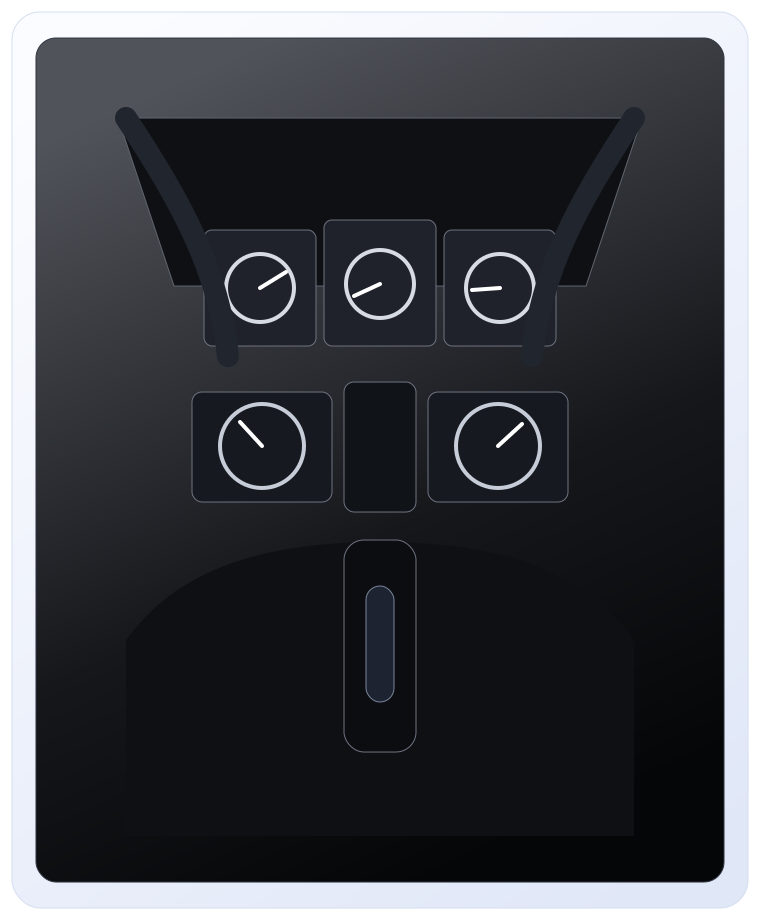
Operations cockpit reference.

Live View: SLA Control View

Intervention surface

An operations-heavy business manages a large queue of exceptions that cut across service, support and management.

46%

Fewer SLA breaches

38%

Triage speed

62%

Manual escalations

The preview should make the intervention surface tangible before the buyer opens the architecture sections below.
Ops-heavy services

Operating sector

12 weeks

Delivery shape

4

System layers

Context

An operations-heavy business manages a large queue of exceptions that cut across service, support and management.

Teams rely on inboxes, spreadsheets and ad hoc escalation to keep work moving, which makes service risk hard to control.

The company needs an operating layer that exposes queue health, breach risk and exception accountability clearly.

Failure pattern

Exception handling is inconsistent because routing logic depends on individual judgment
Service-level breaches are usually discovered after the situation has already escalated
Operational status reporting consumes too much management effort
Work is prioritized by noise instead of explicit service and profitability logic

Decision questions

This proof exists to answer explicit operating questions, not to advertise generic capability.

Question

Which queues need intervention before SLA risk compounds

A credible proof page makes the question explicit before it talks about tooling.

Question

Where exception accountability is unclear or process design is failing

A credible proof page makes the question explicit before it talks about tooling.

Question

How management should rebalance workload when operational pressure spikes

A credible proof page makes the question explicit before it talks about tooling.

Question

Which exception categories justify automation or stronger controls next

A credible proof page makes the question explicit before it talks about tooling.

What was built in practice

The proof should make the operating intervention tangible before anyone talks about stack choices.

Queue signal

Exception Intake Model

A structured entry point classifies and prioritizes work before it disappears into manual queues.

Critical signal

Routing & Ownership Layer

Rules define team accountability and escalation timing instead of leaving it to individual judgment.

Ops control

SLA Operations Dashboard

Managers see backlog health, at-risk cases, and workload concentration in one control view.

What was built

Operational layers

The system is shown as an operating stack so the buyer can judge sequence, accountability, and intervention quality.

01

01

Exception intake model

A structured entry point classifies and prioritizes work before it disappears into manual queues.

02

02

Routing and accountability layer

Rules define which team owns each exception path and when escalation should happen.

03

03

SLA control view

Managers see queue health, at-risk cases and escalation load in one operational view.

04

04

Internal process tooling

Operators work through a purpose-built interface instead of reconstructing status across spreadsheets.

Implementation sequence

How the intervention is composed

Architecture keeps the proof from collapsing into another report or dashboard demo.

01

01

Structure the intake before work disappears

Exceptions enter through consistent fields so triage starts from a real operating signal instead of inbox noise.

02

02

Assign routing and escalation logic

Ownership, queue movement and escalation thresholds are formalized before pressure rises.

03

03

Expose SLA risk early enough to intervene

Managers get one control view for backlog health, breach risk and concentrated workload before service deteriorates.

Architecture view

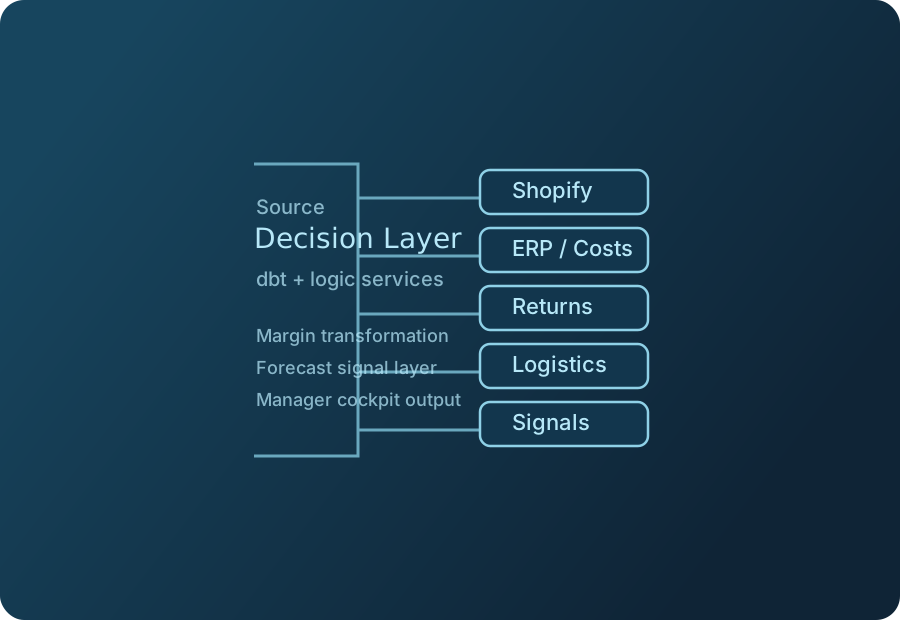
Architecture diagram for the ops exception and SLA workflow system.

The operating stack has to show signal, workflow and intervention logic together.

Impact signal

Less manual noise around triage and escalation

Expected operating outcome from the proof-led system shape shown on this page.

Impact signal

Earlier visibility into SLA risk and queue deterioration

Expected operating outcome from the proof-led system shape shown on this page.

Impact signal

More consistent accountability across operations-heavy teams

Expected operating outcome from the proof-led system shape shown on this page.

Why this proof matters commercially

The value is not the demo surface. It is the earlier control it gives the business.

Less manual noise around triage and escalation
Earlier visibility into SLA risk and queue deterioration
More consistent accountability across operations-heavy teams

Related solution

Ops Workflow & Exception Systems

Systems for operations-heavy teams that need better exception handling, routing, SLA visibility and internal tools.

Industry brief

Logistics / ops-heavy teams

Systems for operations-heavy environments that need better exception handling, SLA visibility and process profitability control.

Next proof project

Commerce Margin & Forecast System

Return to the proof-project index and compare the three decision-system archetypes.

Next step

Use the proof to frame the business case, then decide if the operating problem is strong enough to justify building.